Can’t do a pull-up? Here’s where to start
You’re not behind. A pull-up is one of the hardest reps in fitness, and it’s built by training, like any skill. Start with the parts you can do: hang from the bar, row under it, then hold your chin over it from a box and lower yourself slowly. Those parts add up to the pull.
By Aleksandr Chichkanov, maker of Overbar · Updated October 27, 2026
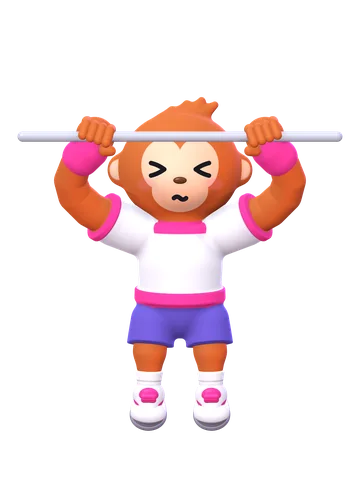
Why can’t I do a pull-up?
Because a pull-up asks your back and arms to lift all of you, from a dead stop, and almost nothing else in daily life or a usual workout trains that. Four things get in the way, and each has a fix:
- Nobody trained it. Push-ups, carrying and most gym routines don’t pull you up to a bar. Rows and hangs start that work.
- The top is the hardest part. Tries often stall with the chin just under the bar. Holds build strength mostly at the angle you hold (Oranchuk 2019), so you train the top directly.
- Grip. If you can’t hang for 10 seconds, your hands give out before your back does. Hangs fix that quickly.
- Training that skips the bar. Pulldown machines help, but in college women pulldown strength predicted pull-ups only loosely (Halet 2009). The bar work matters.
You’re in good company. There’s no reliable figure for how many adults can’t do a pull-up, but 55% of female Marine recruits couldn’t do three at the end of boot camp in 2013 (Military.com).
Find your starting point in two minutes
You need a bar and a sturdy box or chair.
- Hang with straight arms, feet off the floor. Can’t, or under 10 seconds? Start with hangs and rows (Foundations). 10–29 seconds? Hangs, shrugs and rows (Grip & Hang). 30 seconds or more? Go on.
- Hold the top. Step up, chin over the bar, elbows in. Under 15 seconds? Start with top holds (Top Holds).
- Lower. From the top, lower as slowly as you can. Under 5 seconds? Slow lowers are your main move (Slow Lowers).
Time step 1 with the dead hang test, or answer the questions in the first pull-up calculator to see where you’d start and roughly how long it takes.
What to do this week
Three short sessions, a rest day between them. Each one: a minute or two of moving warm-up, the bar first, then rows and a core hold. Stop each set with a rep or two left.
| If you… | Bar | Then |
|---|---|---|
| Can’t hang 10 seconds | Hangs with your feet helping on a box, 3–5 × 10–20 s | Table or inverted rows 3 × 8–12 · hollow hold 2 × 10–20 s |
| Hang 10–29 seconds | Dead hang 3–5 × 10–30 s · hanging shrugs 2–3 × 5–10 | Rows 3 × 8–12 · hollow hold 2–3 × 10–30 s |
| Hang 30 s or more | Top hold 3–5 × 5–15 s · 90° hold 3–5 × 5–15 s | Rows 3 × 8–12 · hollow hold 2–3 × 20–30 s |
| Hold the top 15 s | Slow lowers 2 × 2 at 3–5 s (first week), then 3–4 × 2–3 | Top hold 3 × 15 s · rows 3 × 8–12 |
Add a little each week: a few seconds on a hold, a rep on the rows. Then test again in two weeks.
Can’t do a negative pull-up yet?
If you drop straight down when you try to lower slowly, you’re not ready for full lowers yet, and that’s normal. Build the top first:
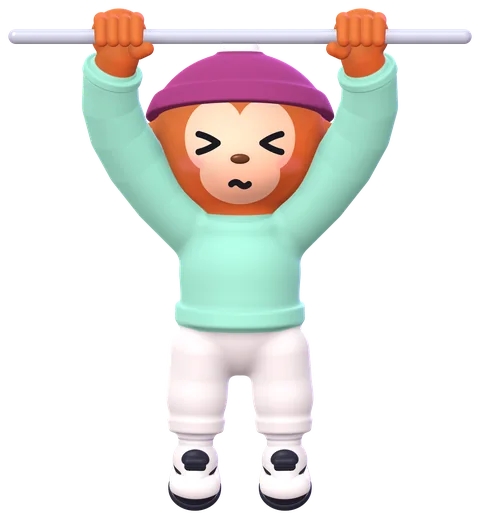
- Top holds from a box, 5–15 seconds, until you can hold 15.
- 90° holds, elbows at a right angle, so the middle gets strong too.
- Assisted lowers: a band under one foot or knee, or your feet lightly on the box, and lower in 3 seconds.
- Full slow lowers, 2 at a time, 3–5 seconds each. Lowering builds more strength than lifting the same load (Roig 2009). Your first week of them will make you sore; keep it short, and the soreness fades as you build up (Hody 2019).
Still can’t do a pull-up after months?
It usually comes down to one of these:
- Once a week. More sessions a week build more strength (Grgic 2018). Two to four short ones beat one long one.
- Every set to failure. Stopping sets early beat grinding in a pull-up study (Sánchez-Moreno 2020), and you recover in time for the next session.
- Only machines, never the bar.
- No holds or slow lowers, only jumping up and dropping down.
- No test. Without timing your hang, hold and lower every couple of weeks, you can’t see what’s moving and what isn’t.
- Pain. Sharp or joint pain isn’t something to train through. Swap the move, ease off, and if it lasts more than a week, see a professional.
No bar yet?
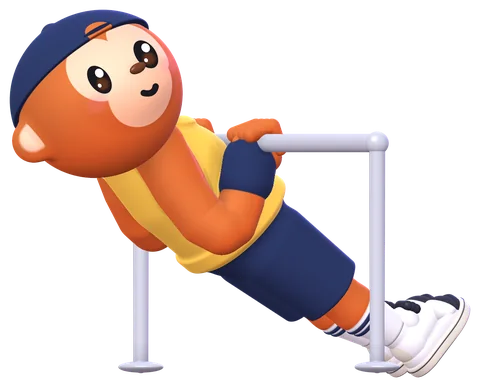
Start anyway. Rows under a solid, non-folding table (test it first), a towel shut in a solid door that opens away from you, and a hollow hold on the floor build the pulling muscles a pull-up needs. Inverted rows work the lats, biceps and upper back hard (Youdas 2016). The pull-up itself needs a bar: a doorway bar installed exactly as its maker says, a park, a gym or rings. Never hang from door frames, door tops or shelves.
Overbar gives general fitness guidance, not medical advice. If you’ve had a shoulder, elbow, neck or wrist injury or surgery, or you’re pregnant, talk to a doctor or physiotherapist first. Burning muscles and next-day soreness are normal; sharp or joint pain isn’t: stop.
Questions
Why can’t I do a single pull-up?
Because a pull-up lifts your whole body with your back and arms, and most daily life and workouts never train that. Grip and the top of the movement are where people often get stuck. Hangs, top holds, slow lowers and rows train each part.
Is it normal not to be able to do a pull-up?
Yes. There’s no reliable count of how many adults can’t, but it’s common even among people who train: 55% of female Marine recruits couldn’t do three at the end of boot camp in 2013.
What should I do if I can’t do a pull-up?
Find your starting point: time your hang, then try holding your chin over the bar from a box, then lowering slowly. Train the first part you can’t do yet, two to four short sessions a week, and test again every two weeks.
Why can’t I do a negative pull-up?
Because lowering slowly takes strength at the top and the middle first. Start with top holds and 90° holds, then lower with a band or your feet helping, then full slow lowers of 3–5 seconds.
Will push-ups help me do a pull-up?
They build pushing strength, and they’re a good sign of overall upper-body strength, but a pull-up is a pull. Rows are the pulling move you can do at home.
How long until I can do one?
For beginners, anywhere from 2 to 12 months. Your starting point decides most of it; the first pull-up calculator gives your own estimate and its range.
Start from where you are.
Overbar times your hang, hold and lower on Day 1 and starts your plan there, even if that’s a few seconds. Day 1 and Quick Hangs are free; Pro is $49.99 a year with a free week, or $5.99 a week.
Download on the App Store