Guide
How to do your first pull-up, from zero
You learn a pull-up in parts. Hang from the bar until you can hold on for 30 seconds. Then hold your chin over the bar, and lower yourself slowly from the top. Once you can lower for 10 seconds and hold the top for 30, try the full pull. Train two to four short sessions a week.
By Aleksandr Chichkanov, maker of Overbar · Updated October 27, 2026
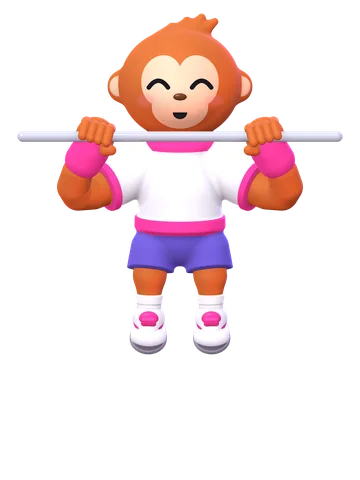
What counts as a strict pull-up?
A strict pull-up starts from a still dead hang with straight elbows and ends with your chin over the bar. No kicking, no swinging, no jump.
- Grip: overhand, hands about shoulder width, thumbs wrapped round the bar. In a small study, very wide grips moved the shoulder in ways linked to impingement (Prinold & Bull 2016).
- Start: arms straight, feet off the floor, body still.
- Finish: chin clears the bar.
- Then: lower under control, and step down rather than drop.
A chin-up (palms facing you) works the same muscles overall, with a little more biceps (Youdas 2010). It’s a fine way to train; this guide aims at the overhand rep, because that’s the one tests count.
Why can’t you just practise pull-ups?
Because you can’t practise a rep you can’t do yet, and trying and failing teaches little. It also takes longer than you might expect: in one 12-week training study, 4 of 17 untrained women got their first pull-up (Flanagan 2003). What works is training the pull-up’s parts, the ones you can do today, and adding a little each week.
More on why it’s hard, and where to start if you can’t hang yet: Can’t do a pull-up?
The four moves that add up to a pull-up
You build the pull from both ends: hang at the bottom, hold the top, lower yourself slowly between them, then pull.
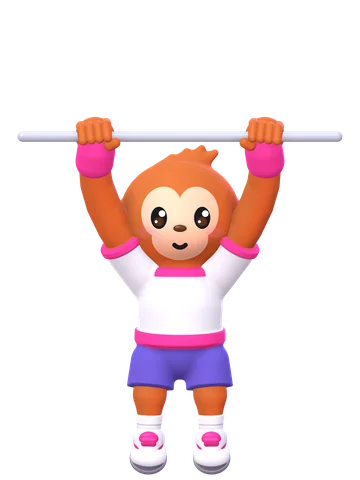
1. Hang
Hang with straight arms and learn to pull your shoulders down, away from your ears: the first inch of every pull-up. Rows and a tight core build your pulling muscles alongside. Coaches take a 30-to-60-second hang as the first sign you’re ready for harder pulling (Beecroft).
- Dead hang: 3–5 sets of 10–30 seconds.
- Hanging shrugs: 2–3 sets of 5–10, arms straight, shoulders down, pause, lower slowly.
- Inverted row: 3 sets of 8–12, body straight, chest to your hands. Rows work the same back and arm muscles (Youdas 2016).
- Hollow hold: 2–3 sets of 10–30 seconds, lower back pressed down, so you don’t swing on the bar.
Time yours with the dead hang test.
2. Hold the top
Step up from a sturdy box or chair, get your chin over the bar, and hold it there: elbows in, shoulders down. Then hold halfway, with your elbows at 90°. The top is where first tries often stall, and holds build strength mostly at the angle you hold (Oranchuk 2019), so you train that spot directly.
- Top hold: 3–5 sets of 5–15 seconds.
- 90° hold: 3–5 sets of 5–15 seconds.
- Band-assisted pull-up: 3 sets of 4–8, the whole movement with a band’s help, a little less help each time you beat the target. It teaches the movement until the strength is there (Crockford, ACE).
3. Lower slowly
From the top, lower yourself as slowly and evenly as you can until your arms are straight, then step back onto the box. This is the negative pull-up, and it’s the backbone of the plan: lowering builds more strength than lifting the same load (Roig 2009).
- Slow lowers: 3–4 sets of 2–3, taking 3–5 seconds at first, then 8–10.
- Top-half pull-ups: 3 sets of 3–5, from a box with your elbows at 90°, chin over the bar.
- Start small. New lowers make you sore, and building up over a week or two prevents most of it (Hody 2019).
4. Pull up
When the lowers and holds are long enough, try the real thing at the start of a session, while you’re fresh: two tries, from a still dead hang. Keep the lowers and holds going between tries. Never grind to failure: stopping sets early beat training to failure in a pull-up study (Sánchez-Moreno 2020).
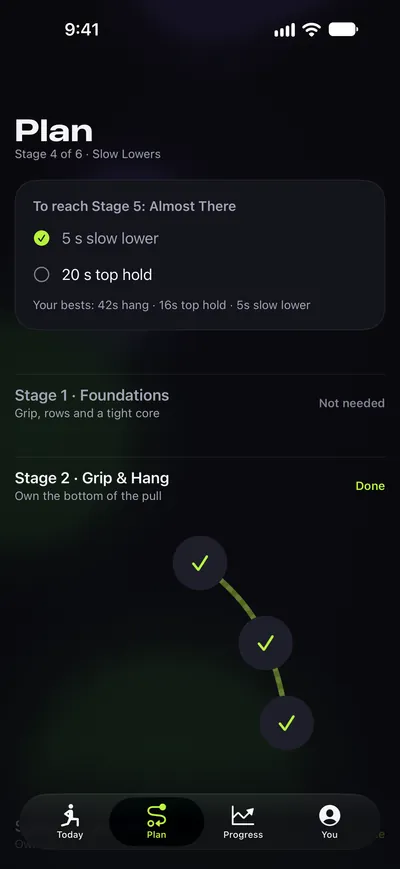
The six stages, and the goal that ends each one
Each stage ends with a goal you can see. Reach it and you move up; not yet, and you get a few more sessions first.
| Stage | What you train | Move on when you have |
|---|---|---|
| Foundations | Rows, a tight core, short hangs | A 20-second dead hang |
| Grip & Hang | Hangs, hanging shrugs, rows | A 30-second hang and 8 rows in a set |
| Top Holds | Top and 90° holds, assisted pull-ups | A 15-second top hold |
| Slow Lowers | Lowers of 3–5 seconds, longer holds | A 5-second slow lower and a 20-second top hold |
| Almost There | Lowers of 8–10 seconds, top-half pull-ups | A 10-second slow lower and a 30-second top hold |
| First Rep | Fresh tries at one strict pull-up | One strict pull-up |
After the first one, Rep Builder takes you on to five in a row. These are the stages Overbar’s plan uses, from coach guidance and the research behind it; the method page has the sources.
Where do you start?
Your hang, your top hold and your slowest lower place you. Two minutes and a bar will tell you; stop at the first step that stops you:
- Hang. Arms straight, feet off the floor, as long as you can. Under 10 seconds: start in Foundations. 10–29 seconds: Grip & Hang. Time it with the dead hang test.
- Hold the top. Step up from a box, chin over the bar, and hold. Under 15 seconds: Top Holds.
- Lower. From the top, lower as slowly as you can. Under 5 seconds: Slow Lowers. 5–9 seconds: Almost There. Ten or more, with a 30-second top hold: try a pull-up.
The app does this for you on Day 1, a free check-in, and checks again every two weeks.
A sample week: 15 minutes, three days
Short sessions done often work. Four 15-minute sessions a week matched two hour-long ones in a study of 290 people, pull-ups included (Kilen 2020). Each session goes the same way: a moving warm-up, the bar work first, then rows and a core hold.
In Grip & Hang (Monday, Wednesday, Friday):
| Part | What | Time |
|---|---|---|
| Warm-up | Arm circles, shoulder rolls, reach-ups, keep moving | 1–2 min |
| Bar | Dead hang 3 × 20 s, hanging shrugs 2 × 8 | 5 min |
| Rows | Inverted or table rows, 3 × 8–10 | 5 min |
| Core | Hollow hold 2 × 20 s | 2 min |
In Slow Lowers, the bar part becomes 3 sets of 2 slow lowers (3–5 seconds each, 2 minutes’ rest) and 3 top holds; the rows and core stay.
Keep your hardest bar work (the slow lowers) off two days in a row. Burning muscles and next-day soreness are normal. Sharp or joint pain isn’t: stop.
What makes it work
- Train often, briefly. More sessions a week build more strength through more total work (Grgic 2018). Two days a week works; three is the sweet spot.
- Stop each set with a rep or two left. Sets should feel strong, not crushing.
- Add one thing at a time: a few seconds, one rep, a little less help.
- Test, don’t guess. Re-time your hang, hold and lower every two weeks, and move on when the numbers say so.
- Keep your grip at shoulder width, overhand, thumbs wrapped.
No bar yet?
You can start today. A strict pull-up needs a bar, but the first stages don’t: rows under a sturdy table, door towel rows and a hollow hold build the pulling muscles a pull-up needs.
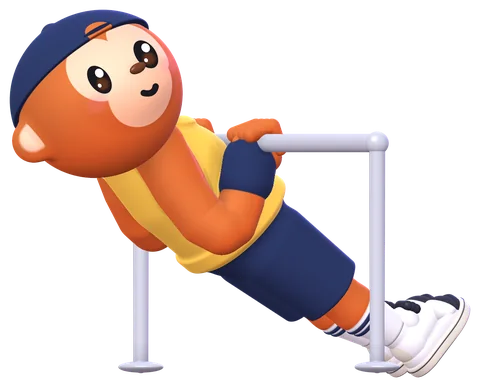
- Table row: a solid, non-folding table only; test it first. Lie under the edge, grip it, body straight, pull your chest up.
- Door towel row: a knotted towel shut in a solid door that opens away from you. Lean back, arms long, pull your chest to your hands.
- Hollow hold: on the floor, lower back pressed down, arms and legs long.
When you get a bar, install a doorway bar exactly as its maker says and check it each time. Never hang from door frames, door tops or shelves. The calculator shows how many weeks you’d need once you have one.
At a gym
Use the assisted pull-up machine like a band that comes off in small steps: start with plenty of help and take a step off when every set reaches its target. The lat pulldown helps early on, but it doesn’t replace the bar: in college women, pulldown strength predicted pull-ups only loosely (Halet 2009), though eight weeks of pulldowns did add pull-up reps in men who could already do some (Li 2025). Bar work first, machines after.
How long does it take?
For beginners, anywhere from 2 to 12 months. Where you start matters most, then how many days you train and what you train with. Read how long it takes, or answer the app’s questions in the first pull-up calculator for your own estimate.
Common mistakes
- Only pulldowns, never the bar. The machine helps; the bar decides.
- Jumping up and dropping down. Step up, and lower slowly: the lowering is the training.
- Skipping the top. First tries often stall with the chin just under the bar. Hold it there.
- Grinding every set to failure. It doesn’t build more, and it makes the next session worse.
- Once a week. Little and often beats one long session.
- A very wide grip. Train the shoulder-width grip the goal rep uses.
Overbar gives general fitness guidance, not medical advice. If you’ve had a shoulder, elbow, neck or wrist injury or surgery, or you’re pregnant, talk to a doctor or physiotherapist first. Burning muscles and next-day soreness are normal; sharp or joint pain isn’t: stop.
Questions
How do I do a pull-up if I can’t do one yet?
Learn it in parts. Hang until you can hold on for 30 seconds, then hold your chin over the bar from a box, then lower yourself slowly from the top. When you can lower for 10 seconds and hold the top for 30, try the full pull while you’re fresh.
Negatives or band-assisted pull-ups: which is better?
Use both. Slow lowers (negatives) build the most strength, because lowering builds more than lifting the same load. Bands let you practise the whole movement with help. Overbar’s plan uses bands or the assisted machine in Top Holds and leans on slow lowers from then on.
How many times a week should I train for a pull-up?
Two to four days. Three days of 15 minutes is a good start. More days help through more total work; with four, keep the slow lowers off two days in a row.
Can I learn a pull-up at home?
Yes. A doorway bar is enough for the whole plan, and with no bar you can start with table rows, towel rows and a hollow hold. The strict pull-up itself needs a bar.
How do I know I’m ready to try a full pull-up?
When you can lower yourself from the top for about 10 seconds and hold your chin over the bar for 30. Then try at the start of a session, two tries, from a still dead hang.
Should I train until I can’t do any more?
No. Stop each set with a rep or two left. In a pull-up study, stopping sets early beat training to failure, and it leaves you fresh for the next session.
Are chin-ups easier than pull-ups?
They’re close. Both work the same muscles overall; the chin-up uses more biceps and chest, the pull-up more of the lower trapezius. Chin-ups are a good training variation; the goal rep is overhand.
Your plan, from where you are today.
Overbar measures your hang, hold and lower on Day 1, builds the six stages around your week and your bar, and estimates your date. Day 1 and Quick Hangs are free; Pro is $49.99 a year with a free week, or $5.99 a week.
Download on the App Store