Zero to one pull-up
Can’t do a single pull-up? Overbar is the iPhone coach that takes you from zero to your first strict one.
Download on the App StoreDay 1 and Quick Hangs are free. Pro is $49.99 a year.
How long until your first pull-up?
Your first pull-up, in about
24 weeks
Likely between 14 and 46 weeks, at 3 days a week.
One more day a week brings it to about 21 weeks.
You’d start in Grip & Hang, about 35% pull-up ready.
An estimate. In the app, Day 1 measures you and sets your own date, and it moves after every workout.
Get your own dateHow it works
First, a short quiz.
How long you can hang, how many push-ups you can do, what you train with and how many days you’ve got. About three minutes.
Then Day 1 measures you.
A short check-in: how long you hang, hold and lower. It’s free, and your plan starts from what it finds.
Then 15 minutes, 3 days.
Warm-up, holds, slow lowers and rows, with Obie and a timer. Every session adapts to how the last one felt.
Then you’re over.
Your chin clears the bar: your first strict pull-up. Obie celebrates, and you get a card to prove it.
Four moves to your first pull-up
You can’t pull yourself up yet, so you learn the pull in parts: hang at the bottom, hold the top, then lower yourself slowly from it. Together they add up to your first pull-up.
How you move on. The plan runs them in six stages. Each stage ends with a goal you can see, like a 30-second hang. Reach it and you move up; not yet, and you get a few more sessions first. The app checks where you are every two weeks.
-
Hang
Foundations, then Grip & Hang
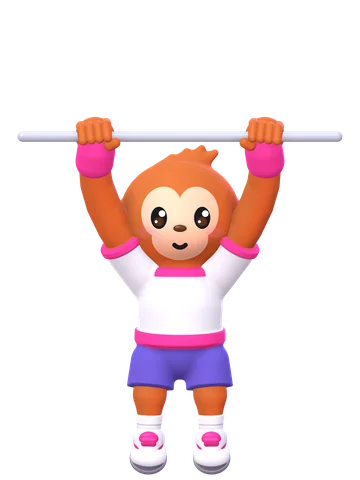
Hang from the bar with straight arms and learn to pull your shoulders down. Rows and a tight core build your pulling muscles alongside.
30 sHang this long, and do 8 rows in a set, to move on.
Moves, doses and studies
- Dead Hang3–5 sets × 10–30 sGrip, and shoulders used to hanging. Coaches take a 30 to 60 second hang as the first sign you’re ready for harder pulling (Beecroft).
- Hanging Shrugs2–3 sets × 5–10 repsArms straight, pull your shoulders away from your ears: the first inch of every pull-up.
- Inverted Row3 sets × 8–12 repsPulling your chest up to a low bar works the back and arm muscles a pull-up needs (Youdas 2016). No low bar? A table row or a door towel row.
- Hollow Hold2–3 sets × 10–30 sA tight core that stops you swinging on the bar.
-
Hold the top
Top Holds
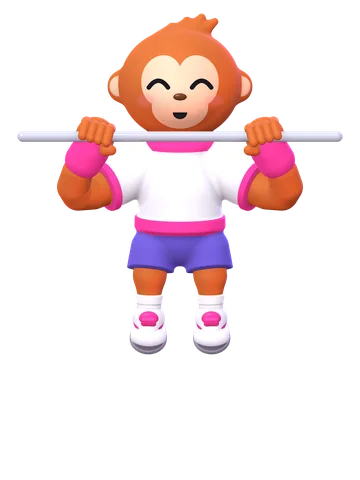
Step up from a box and hold your chin over the bar, then hold halfway with your elbows at 90°. The top is where most first tries stall.
15 sHold your chin over the bar this long to move on.
Moves, doses and studies
- Top Hold3–5 sets × 5–15 sChin over, elbows in, shoulders down. Holds build strength mostly at the angle you hold (Oranchuk 2019), so you train the hardest spot directly.
- 90° Hold3–5 sets × 5–15 sElbows at a right angle: strength in the middle of the pull.
- Band-Assisted Pull-Up3 sets × 4–8 repsThe whole movement with a band’s help, and a little less help each time you beat the target. At a gym, the assisted machine takes help off in small steps.
-
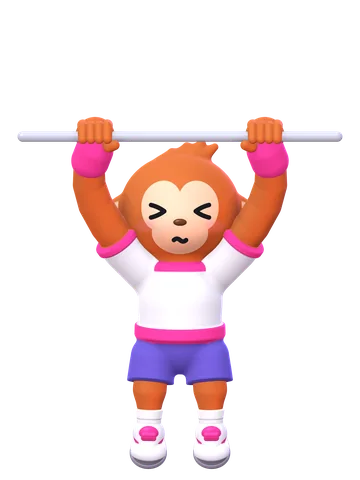
Lower slowly
Slow Lowers, then Almost There
From the top, lower yourself as slowly and evenly as you can, then pull the top half of the way from a box. Lowering builds pull-up strength fastest.
10 sLower this slowly to move on: 5 seconds first, then 10.
Moves, doses and studies
- Slow Lowers3–4 sets × 2–3, 3–5 s down, then 8–10 sLowering builds more strength than lifting the same load (Roig 2009). The first week is short on purpose: new lowers make you sore (Hody 2019).
- Top-Half Pull-Ups3 sets × 3–5 repsFrom a box with your elbows at 90°, pull your chin over the bar: the last half of the range, where it’s hardest.
- Top Hold3 sets × 15–30 sLonger holds at the top, so it stays strong while you lower.
-
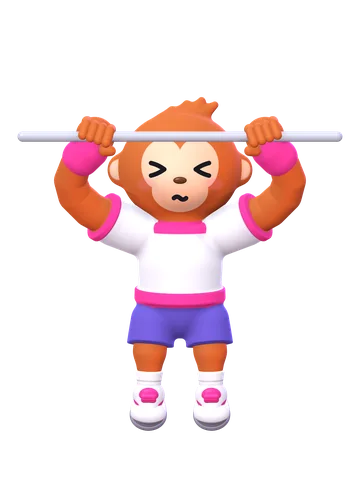
Pull up
First Rep
Fresh tries at one strict pull-up, from a dead hang to your chin over the bar, while the lowers and holds keep going. Obie cheers the first one.
1Strict pull-up. You’ve gone from zero to one.
Moves, doses and studies
- Strict Pull-Up2 tries, first, while you’re freshStraight elbows to chin over the bar, no swing. Never to failure: stopping sets early beats grinding (Sánchez-Moreno 2020).
- Slow Lowers3 sets × 2, 8–10 s downThey keep building the whole pull between tries.
- Top-Half Pull-Ups3 sets × 3–5 repsAfter your first one, Rep Builder takes you on to five.
Doses are a beginner’s range from the research. The app sets yours from Day 1 and adjusts it after every session.
Meet Obie, your teammate
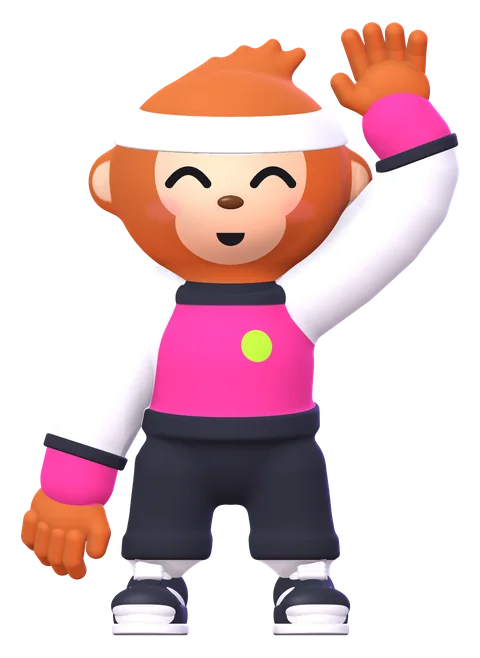
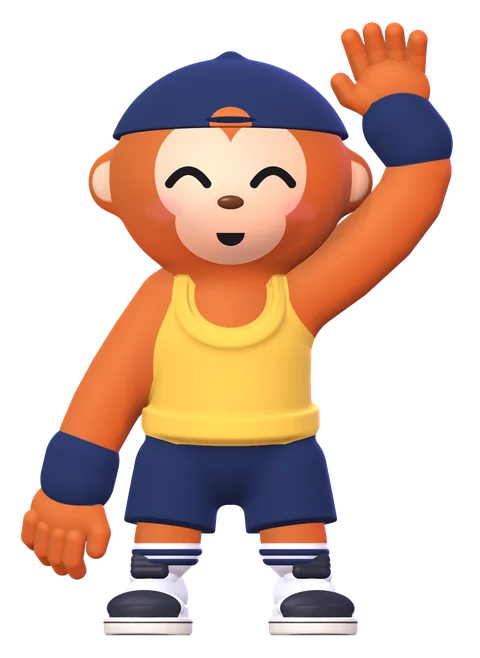
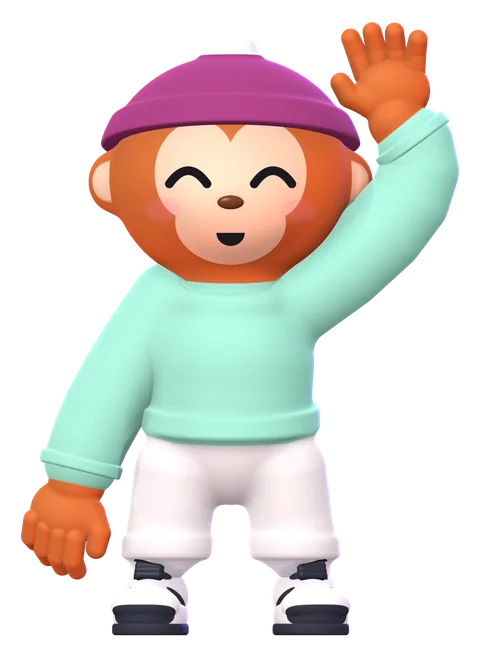
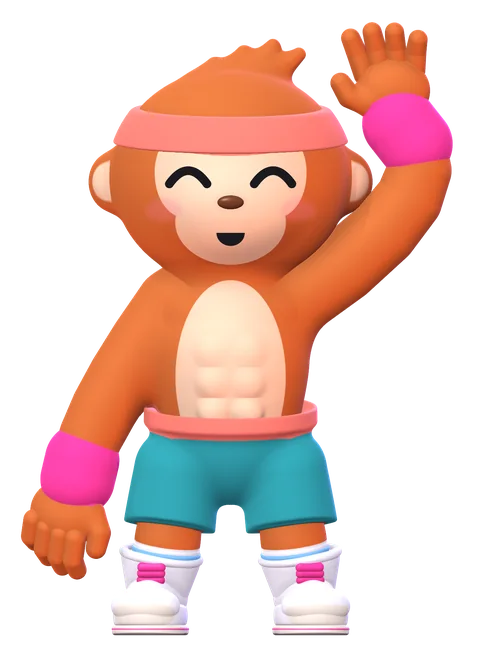
Obie is an orangutan who trains beside you. It does every exercise with you, counts you through the hard seconds and cheers every win. Ask about your plan and Obie answers on your iPhone, with Apple Intelligence: nothing you ask leaves the device.
Train, and Obie earns new pieces for its Locker. Try some on.
Pricing
Day 1 and Quick Hangs are free, always. Pro opens every session after Day 1. Read the subscription terms before you buy: Pro renews automatically until you cancel in Settings, at least 24 hours before it renews. Prices are in US dollars; the App Store shows yours.
Weekly
For trying the whole plan without a year’s commitment.
Every session after Day 1 through all six stages, Obie’s chat on devices with Apple Intelligence, and Pro pieces in Obie’s Locker. No trial; cancel any week in Settings.
$5.99 a week
Choose weeklyYearly
For the whole way to your first pull-up, and past it.
Everything in Pro, with the first week free. Then $49.99 a year, about $0.96 a week. The app reminds you a day and a half before your trial ends.
$49.99 a year
Start your free week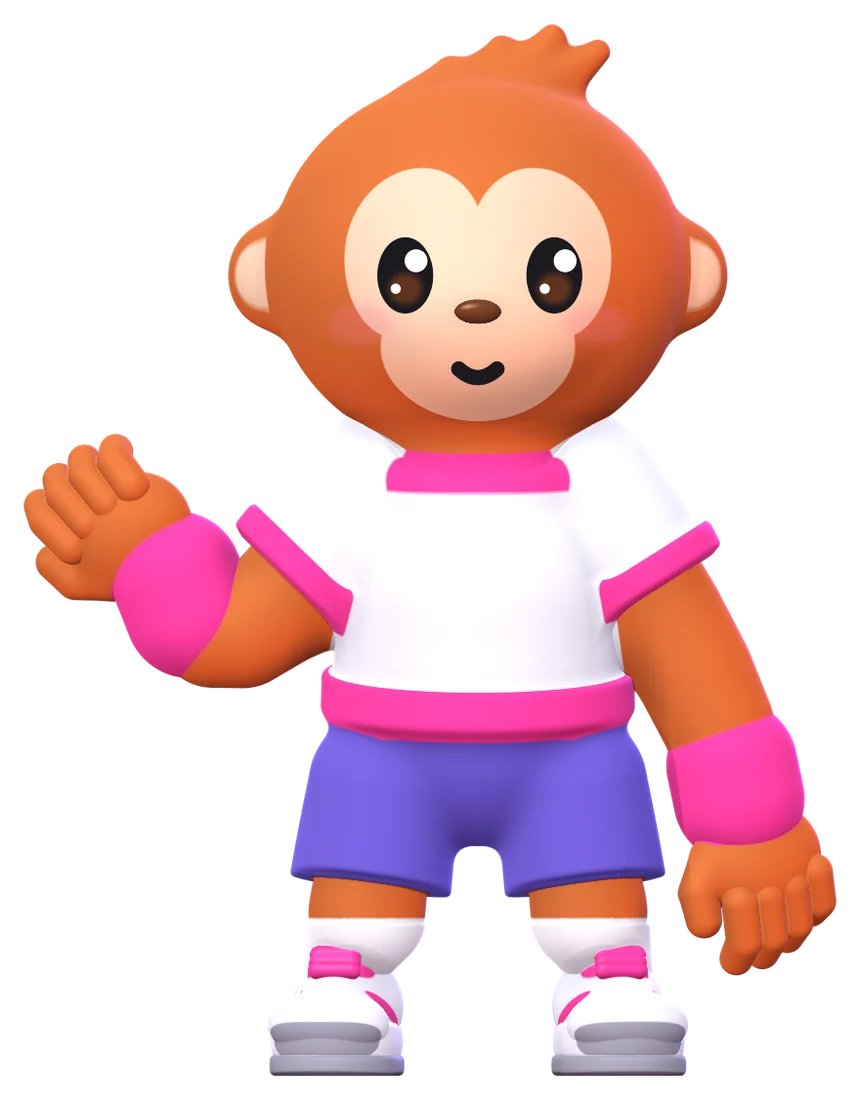
Can a complete beginner learn to do a pull-up?
Yes. Overbar is built for people who can’t do one pull-up yet. Day 1 checks how long you can hang, hold and lower, and your plan starts from there, even if that’s a few seconds.
How long does it take to do your first pull-up?
It depends on where you start, how often you train and what you train with: for beginners it’s anywhere from 2 to 12 months. Overbar estimates your own date and its likely range from your answers and Day 1, using published training research, and updates it after every workout. It’s an estimate, never a promise. Work out yours with the calculator at the top of this page.
What if I can’t hang from a bar yet?
Then you start with Foundations: rows, a tight core and short hangs with your feet helping. The plan moves on when your check-in shows you’re ready, not on a fixed calendar.
Are negative pull-ups good for beginners?
Yes. A negative pull-up, or slow lower, starts with your chin over the bar and lowers you under control. Lowering builds more strength than lifting alone (Roig 2009), so Overbar uses slow lowers through the middle of the plan, starting from a box and adding seconds gradually.
Do I need a pull-up bar?
A strict pull-up needs a bar: a doorway bar, a park, a gym or rings. Until you have one, the plan uses table rows, towel rows and floor work, and shows how many weeks you’ll need once you have a bar.
Can women do pull-ups with this plan?
Yes. In training studies women gain upper-body strength at least as fast as men (Roberts 2020). The plan is the same for everyone; it starts from where you are on Day 1.
How long are the sessions?
You choose 10, 15, 20 or 30 minutes, two to four or more days a week. Fifteen minutes, three days a week, is the recommended start.
What’s free, and what does Pro add?
Day 1 and Quick Hangs are free, and Quick Hangs keep your streak every day. Pro opens every session after Day 1 through all six stages, Obie’s chat on devices with Apple Intelligence, and Pro pieces in Obie’s Locker. Pro is $49.99 a year with a 1-week free trial, or $5.99 a week.
Does my data leave my phone?
Your answers, workouts and progress stay on your device, and there’s no account. To fix crashes and improve the app, it sends usage and crash reports tied to a random ID, never to your name. They include an age range and the sex you chose, never your exact age, height, weight or pain. To ask about them or have them deleted, email support@chileks.com. Obie’s chat runs on your device. Privacy Policy
How do I cancel?
On your iPhone, open Settings, tap your name, then Subscriptions, then Overbar. Cancel at least 24 hours before your trial ends or your plan renews. Deleting the app doesn’t cancel it.
I’ve had a shoulder injury. Can I use Overbar?
Overbar gives general fitness guidance, not medical advice. If you’ve had a shoulder, elbow, neck or wrist injury or surgery, talk to a doctor or physiotherapist before you start. In the app, flag pain after a set and the next session goes gentler. Stop if pain is sharp or in a joint.